What Your Bank Statement Is Trying to Tell You
Lessons from my conversation on the Work With Your Cycle Podcast
Let's be honest: bookkeeping isn't usually what entrepreneurs get excited about.
Most wellness business owners start their businesses because they're passionate about helping people—not because they love reconciling transactions, reviewing profit and loss reports, or sorting through receipts.
But here's the truth:
Your financial wellness is just as important as the wellness you provide your clients.
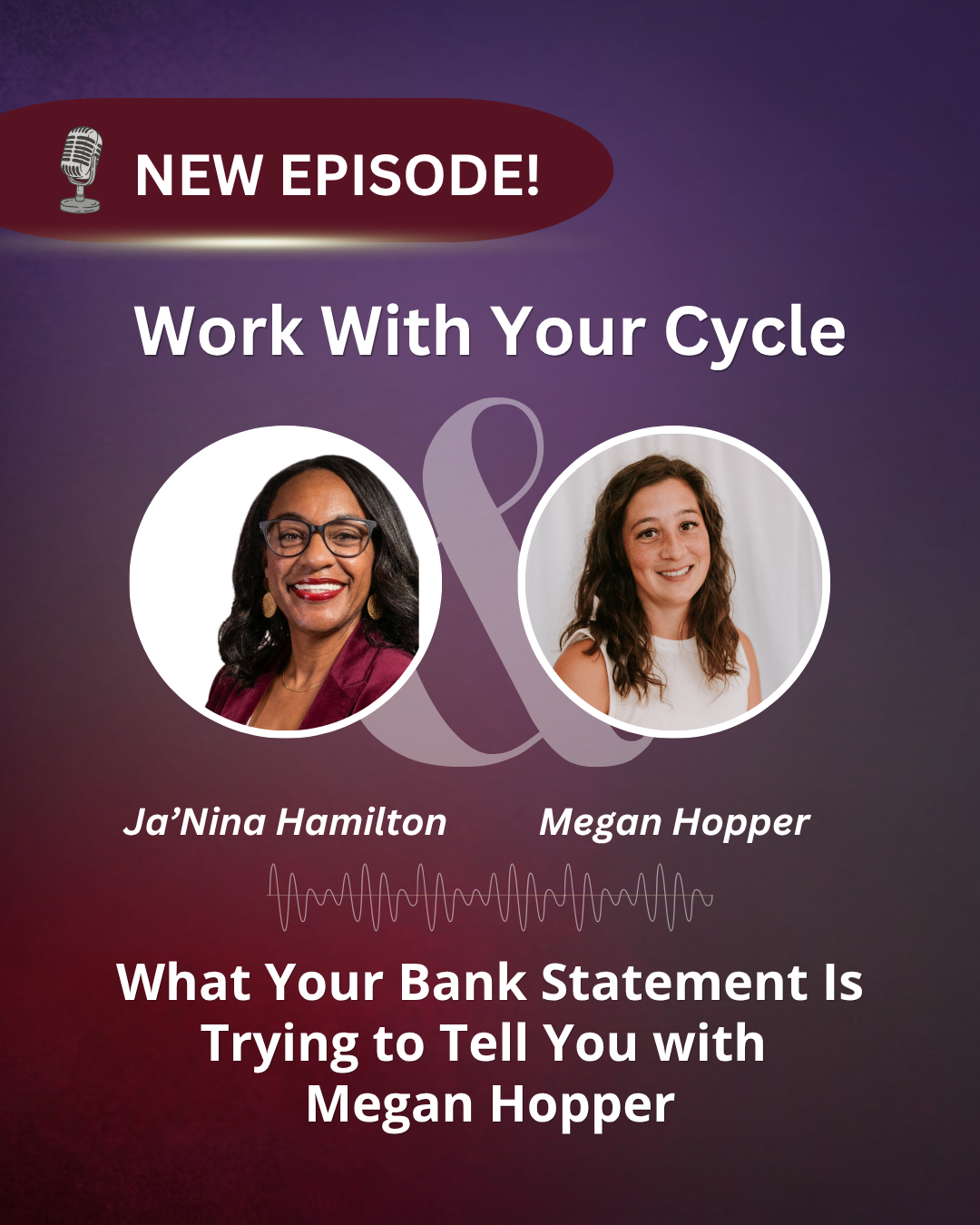
Recently, I had the privilege of joining the Work With Your Cycle podcast to discuss something many business owners avoid: their numbers.
During our conversation, we talked about why so many women feel fear, embarrassment, or overwhelm when it comes to bookkeeping and how building simple financial habits can completely change the way you run your business.
Why So Many Business Owners Avoid Their Numbers
If you've ever ignored your bank account balance, postponed bookkeeping until tax season, or felt nervous opening financial reports, you're not alone.
Many entrepreneurs associate bookkeeping with stress because they worry they'll discover:
They're spending too much
They're not making enough
They owe more in taxes than expected
They've made financial mistakes
Unfortunately, avoiding your numbers doesn't make the problem go away—it simply delays the opportunity to make informed decisions.
When you understand what's happening financially in your business, you gain the ability to make proactive decisions instead of reactive ones.
Your Bank Statement Is Telling a Story
Every transaction in your business tells a story.
Your bank statement can reveal:
Which services are generating the most revenue
Whether your software subscriptions are still worth the cost
If your expenses are growing faster than your income
Seasonal patterns in your business
Cash flow challenges before they become emergencies
Think of your bookkeeping as a health checkup for your business.
Just as you wouldn't wait until you're seriously ill to see a doctor, you shouldn't wait until tax season to understand your financial health.
Early Warning Signs You Should Pay Attention To
Many business owners don't realize there are often warning signs long before financial problems become serious.
Some common indicators include:
Consistently Low Cash Balances
Even if revenue looks healthy, low cash reserves can create stress and limit future opportunities.
Rising Expenses Without Revenue Growth
If expenses continue climbing while revenue remains flat, profitability can quietly erode over time.
Avoiding Financial Reports
Sometimes the biggest warning sign isn't in the numbers themselves—it's avoiding them altogether.
Surprise Tax Bills
Unexpected tax obligations often signal that bookkeeping isn't being reviewed regularly throughout the year.
How Understanding Your Numbers Helps You Grow
When you know your numbers, you gain clarity.
That clarity allows you to:
Hire with confidence
Invest in marketing strategically
Launch new offers thoughtfully
Set realistic revenue goals
Pay yourself consistently
Prepare for taxes year-round
The most successful business owners aren't necessarily financial experts.
They're simply willing to pay attention.
Align Your Money Tasks With Your Energy
One of my favorite parts of the conversation was discussing how women can align financial tasks with their natural energy levels.
Not every business task requires the same mental capacity.
For example:
High-Energy Days
Use these days for:
Financial planning
Reviewing reports
Budget decisions
Goal setting
Lower-Energy Days
Use these days for:
Categorizing transactions
Filing receipts
Administrative bookkeeping tasks
Reviewing account balances
Working with your natural rhythms can make bookkeeping feel significantly less overwhelming.
The Monthly Money Date That Changes Everything
If there's one habit I wish every business owner would implement, it's a monthly money date.
A money date is simply dedicated time on your calendar to review your finances without distractions.
During your money date:
✔ Review income and expenses
✔ Check account balances
✔ Look at your profit and loss report
✔ Celebrate wins
✔ Identify concerns early
✔ Plan for upcoming expenses
This doesn't have to take hours.
Even 20–30 minutes each month can dramatically improve your relationship with your finances.
Financial Wellness Is Business Wellness
As wellness professionals, we spend a lot of time helping others feel their best.
But financial stress impacts every area of life—from sleep and mental health to confidence and decision-making.
That's why I believe bookkeeping isn't just about taxes.
It's about creating peace of mind.
It's about giving yourself the information you need to make empowered decisions.
And it's about building a sustainable business that supports the life you're working so hard to create.
You don't need to become an accountant.
You simply need a system that helps you stay connected to your numbers consistently.
Because when you understand what your bank statement is trying to tell you, you're able to lead your business with confidence instead of uncertainty.
Listen to the Full Podcast Episode
I had such a wonderful time discussing financial wellness, bookkeeping habits, and business confidence on the Work With Your Cycle podcast.
Listen here:
Apple Podcasts: https://podcasts.apple.com/us/podcast/work-with-your-cycle-hormone-based-productivity-profit/id1882022293?i=1000773254469
Spotify: https://open.spotify.com/episode/4skjfIZdCHalrjX3TsaMQi?si=b7k8kDGxRFOdrOxI8jf-jA
Need Help Understanding Your Numbers?
At Numbers Wellness & Company, we help wellness business owners gain clarity and confidence in their finances through bookkeeping support designed with real life in mind.
Because financial wellness is wellness, too. 🩵🌊